
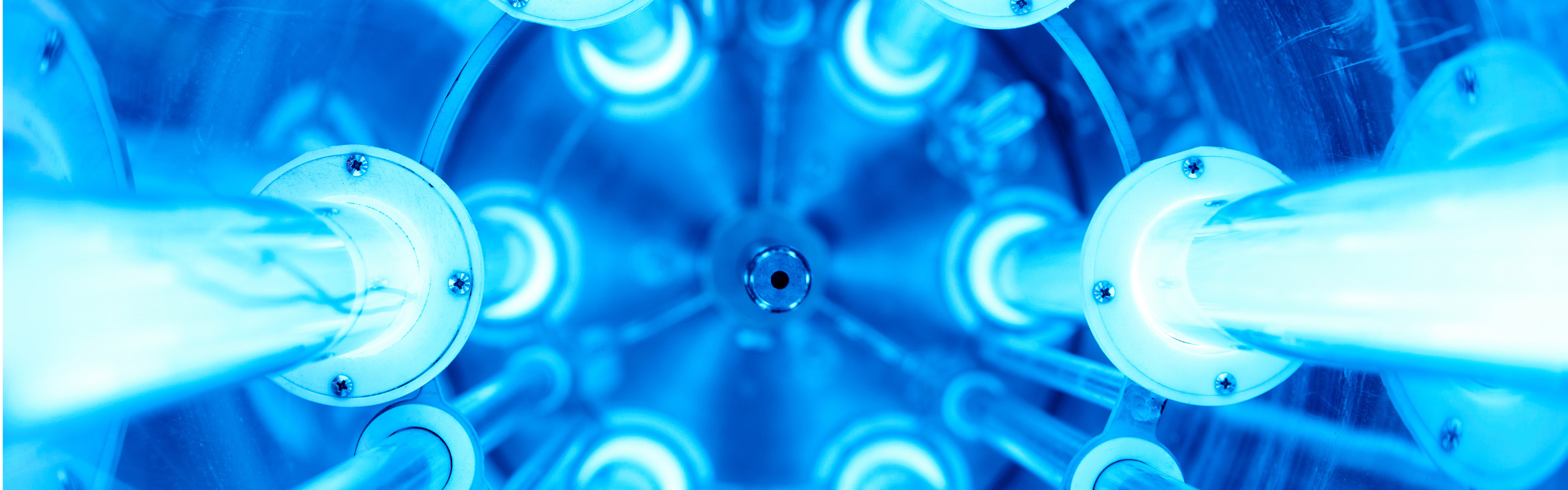

Mercury lamps are the workhorse of germicidal UV. When an electric arc passes through mercury vapor, the mercury gives off ultraviolet light, and in a low-pressure germicidal lamp most of that output falls on the 254 nm line that inactivates bacteria and viruses. LightSources and its European partner LightTech manufacture low-pressure mercury, amalgam, and medium pressure UV lamps for OEMs that build water, air, and surface disinfection systems. This guide explains how the main lamp types differ and where each one fits.
How do low-pressure mercury lamps produce UVC?
A low-pressure mercury lamp holds a small amount of mercury and an inert gas inside a quartz or special glass tube. Liquid mercury collects at the coolest point on the lamp wall, called the cold spot, and the cold spot temperature sets the mercury vapor pressure that controls UVC output. Unlike general lighting fluorescent tubes, germicidal lamps have no phosphor coating, so the UV passes straight through the tube. LightSources low pressure mercury lamps convert about 40% of electrical power to UVC at 254 nm.
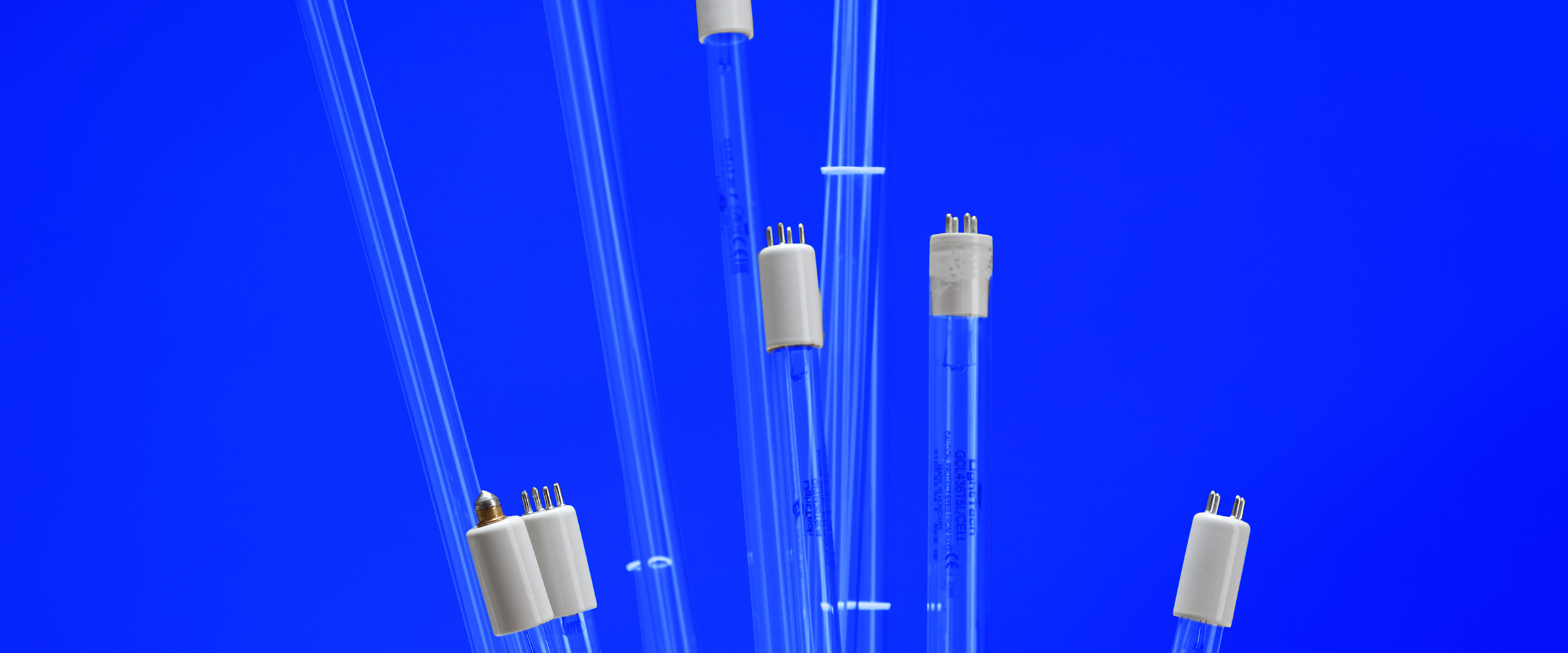
Which mercury lamp types does LightSources make?
- Standard output lamps: Soft glass or quartz, operating at up to about 425 mA. They suit systems with longer exposure times and lower flow rates.
- High-output lamps: Operate at 600 to 800 mA and give up to 66% more UV output than standard lamps of the same length. They suit systems with higher flow rates.
- Low-pressure amalgam lamps: Hold mercury in an amalgam pellet instead of a cold spot, which keeps output stable over a wider temperature range and gives up to 3x the UV-C output of comparable standard lamps of the same length. See low pressure amalgam lamps.
- Medium pressure lamps: Run at 100 to more than 700 watts per inch with a broad UV spectrum, for high-flow water, ballast water, and advanced oxidation systems. See medium pressure UV lamps.
- Specialty lamps: Quartz U-lamps, compact lamps, soft glass compact lamps, and Quartz Germipak cell lamps, designed to fit OEM equipment.
Should you choose soft glass or quartz lamps?

Soft glass lamps cost less, run on lower currents between 180 and 425 mA, and have a germicidal efficiency of about 30%. They are ozone free and come in standard and high output. Quartz lamps are stronger and more resistant to solarization, the gradual loss of UV transmission caused by UV exposure. Quartz lamps come in ozone-free and ozone-generating versions and in standard and high output. For more on glass types, see 254 nm UV lamps.
Do you need ozone-free or ozone-generating lamps?
Ozone-free lamps use doped quartz that blocks the 185 nm line, so they emit 254 nm only and can also break down leftover ozone in water. Ozone-generating lamps let 185 nm through, which turns oxygen into ozone, a strong oxidizer used for odor control and for reaching areas that direct UV light does not. LightSources offers two ozone-generating types: “H” (high output ozone) and “VH” (very high ozone). Ozone-generating lamps belong in ducts and enclosed systems where the ozone is contained. See UVC ozone lamps.
How does LongLife+ coating extend lamp life?
LightSources’ proprietary LongLife+ coating slows the loss of UVC output as a lamp ages. Low-pressure mercury lamps with LongLife+ run up to 16,000 hours and keep 80% of their UVC output at end of life.
How does LightSources work with OEMs on mercury lamp designs?
LightSources and LightTech build standard and custom mercury lamps for OEMs, matching lamp type, glass, ozone output, length, current, and base to each system. LightSources builds custom lamps through its OEM custom lamp design and Rapid Prototype Program under an ISO 9001:2015 registered quality system. Talk to Our Engineering Team about mercury lamps for your next system.
Frequently asked questions

These answers cover common questions about germicidal mercury lamps.
Does the Minamata Convention ban germicidal mercury lamps?
No. The Minamata Convention’s lamp phase-outs cover fluorescent lamps for general lighting, and parties must phase out their manufacture, import, and export by 2027 (United Nations). The convention does not prohibit mercury lamps for germicidal use (Optica). OEMs should still check the national and regional rules for each market they sell into.
What is solarization, and how does it affect UV lamps?
Solarization is a gradual loss of UV transmission in glass and quartz that are exposed to UV light. Along with electrode wear and mercury deposits on the lamp wall, it is one of the reasons UV output falls as a lamp ages (UNH Water Treatment Technology Assistance Center). Quartz resists solarization better than soft glass.
Why does cold spot temperature matter in a low-pressure mercury lamp?
Because it sets the mercury vapor pressure, and the vapor pressure sets UVC output. When the cold spot runs too cold or too hot, output drops, which is why standard lamps lose output in very cold air or hot enclosures. Amalgam lamps hold mercury in a pellet instead, so they keep stable output over a wider temperature range.
References
- United Nations. UN Geneva switches to LED lighting (Minamata Convention fluorescent lamp phase-out). un.org
- Optica (Optics & Photonics News). UV lighting industry eyes mercury-ban impact, January 2020. optica-opn.org
- University of New Hampshire, Water Treatment Technology Assistance Center. UV lamp and sleeve. unh.edu
LAMP PRODUCT DATA:
LAMP APPLICATIONS:
LightSources and LightTech design and manufacture low-pressure mercury, amalgam, and medium pressure UV lamps in soft glass and quartz, in ozone-free and ozone-generating versions, for OEM water, air, and surface disinfection systems. LightSources lamps are made under an ISO 9001:2015 registered quality system. Contact Us to learn more about LightSources mercury lamps.


