
Table of Contents
- 1 UV Lamp Applications Depend on Wavelength, Dose, and System Design
- 1.1 UV Disinfection
- 1.2 Air Disinfection and UVGI
- 1.3 Surface and Object Pathogen Reduction
- 1.4 UV Curing for Printing, Coatings, Adhesives, and Composites
- 1.5 Phototherapy and Medical UV Applications
- 1.6 Photolithography and Wafer Exposure
- 1.7 Ozone Generation and Advanced Oxidation Support
- 1.8 UV Inspection, Fluorescence, and NDT
- 1.9 Insect Attraction and Pest Control
- 1.10 Far-UVC and Occupied-Space UV Technologies
- 2 How OEMs Select the Right UV Lamp for the Application
- 3 Common UV Application Questions
- 4 Discuss Your UV Lamp Application with LightSources
UV Lamp Applications Depend on Wavelength, Dose, and System Design
UV lamps are used in OEM systems when controlled ultraviolet output is needed to disinfect, cure, expose, inspect, attract, or activate materials. The right lamp depends on the required wavelength, delivered dose, exposure geometry, electrical interface, operating environment, and service requirements.
LightSources supports OEM teams developing UV and specialty lamp systems for applications across water, air, surface treatment, curing, phototherapy, inspection, fluorescence, ozone generation, actinic light, and Far-UVC. Each program starts with the final equipment design rather than a generic lamp category.
UV Disinfection
Liquid UV disinfection systems use ultraviolet energy to reduce pathogens in water and process liquids. OEM equipment designs must account for flow rate, UV transmittance, chamber geometry, lamp sleeve conditions, exposure time, and maintenance access.
LightSources supports lamp programs for water-treatment equipment used in municipal, industrial, commercial, aquatics, food and beverage, and other liquid-disinfection applications. The lamp must integrate with the reactor design and support consistent output over the intended service interval.
Air Disinfection and UVGI
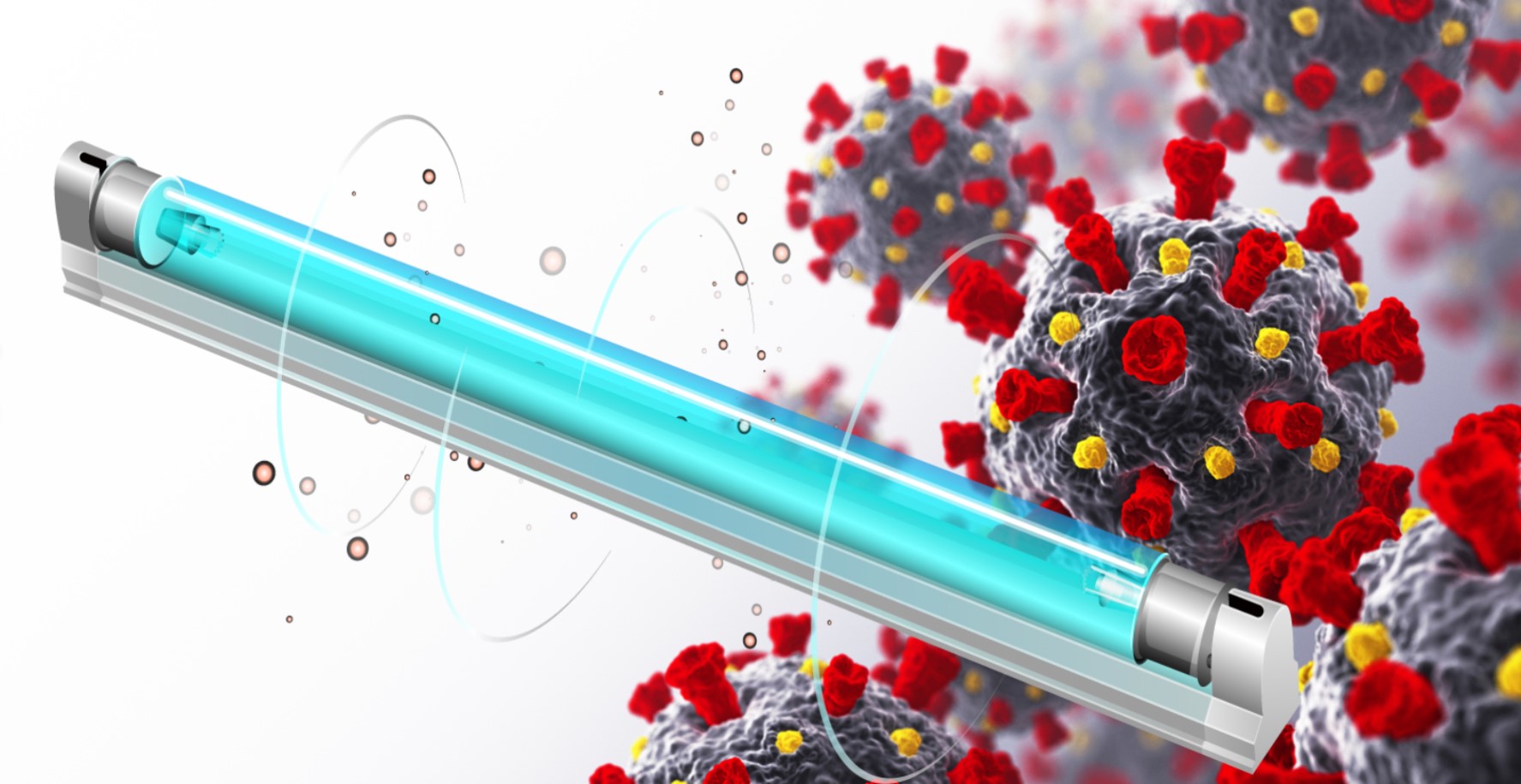
Air disinfection and UVGI applications use UVC lamps in HVAC equipment, duct systems, coil treatment systems, enclosed air devices, and related air treatment technologies. Lamp placement, airflow velocity, distance from the target area, materials, shielding, and maintenance schedules all affect system design.
OEMs developing air disinfection equipment need lamp solutions that fit the mechanical and electrical design while supporting the intended exposure strategy. LightSources works with OEM teams to evaluate lamp form factor, output requirements, service access, and lifecycle supply.
Surface and Object Pathogen Reduction
Surface and object UV applications depend heavily on line of sight, distance, exposure time, surface geometry, and shadowing. These systems may be designed as enclosed chambers, mobile equipment, conveyor systems, robotic platforms, or other controlled exposure devices.
LightSources supports OEMs developing surface and object UV equipment by offering lamp options that align with system layout, exposure requirements, and safety controls. Proper system engineering is critical because the lamp output must reach the target surfaces under real-use conditions.
UV Curing for Printing, Coatings, Adhesives, and Composites
UV curing uses ultraviolet energy to initiate photochemical reactions in inks, coatings, adhesives, composites, and other UV-curable materials. Effective curing depends on spectral match, irradiance, exposure time, cure depth, substrate sensitivity, and production speed.
LightSources supports OEM curing equipment manufacturers with lamp solutions for industrial production environments. Lamp selection should be based on the chemistry, process window, part geometry, thermal limits, and replacement strategy required by the equipment platform.

Phototherapy and Medical UV Applications
Phototherapy and medical UV systems require controlled wavelengths and reliable output. Applications may involve UVB narrowband, UVB broadband, UVA-1, or other specialty lamp outputs depending on the medical device and intended treatment approach.
LightSources supports OEMs developing phototherapy and medical UV equipment where wavelength accuracy, output consistency, lamp geometry, base configuration, and replacement availability are important to the equipment design.
Photolithography and Wafer Exposure
Photolithography and wafer exposure applications require controlled ultraviolet output for precision manufacturing processes. These systems may involve specific lamp formats, exposure requirements, thermal conditions, and integration constraints tied to semiconductor and electronics equipment.
LightSources supports OEMs with specialty lamp engineering for technical applications where process repeatability and equipment compatibility are central to the design.
Ozone Generation and Advanced Oxidation Support
Certain UV applications require ozone-producing wavelengths or UV-driven oxidation processes. These systems must be engineered carefully because ozone generation, ventilation, materials, safety controls, and system containment all affect equipment design.
LightSources supports OEM teams evaluating ozone-producing and specialty UV lamp configurations for properly controlled applications. Lamp selection should always be matched to the process, equipment architecture, and required safety measures.
UV Inspection, Fluorescence, and NDT
UV inspection and fluorescence applications use ultraviolet output to activate a visible response in target materials, dyes, minerals, coatings, contaminants, or inspection media. These applications are common in non-destructive testing, leak detection, mineral detection, forensic tools, quality inspection, and industrial process review.
LightSources supports OEMs with specialty lamp options that match the required wavelength range and equipment format. The correct lamp helps the system produce a reliable fluorescence or inspection response in the intended use environment.
Insect Attraction and Pest Control
Actinic and blacklight lamps are used in insect-attraction and pest-control equipment for commercial kitchens, restaurants, hospitality environments, and industrial food-service applications. These systems require lamp wavelengths that attract insects while meeting the equipment design and service requirements.
LightSources supports OEMs with compact and specialty lamp solutions for actinic applications, including replacement and custom configurations for commercial equipment platforms.
Far-UVC and Occupied-Space UV Technologies
Far-UVC technologies, including 222-nm excimer applications, are used in emerging designs for occupied spaces and specialized UV disinfection. These applications require careful review of wavelength, filtering, fixture design, exposure limits, safety controls, regulatory context, and system validation.
LightSources supports OEM conversations about Far-UVC and specialty lamp integration, in which the lamp must function as part of a controlled equipment platform.
How OEMs Select the Right UV Lamp for the Application
OEM lamp selection should begin with the application objective, not the lamp catalog. The same lamp family may perform differently depending on geometry, distance, airflow, fluid conditions, reflectors, duty cycle, heat, and maintenance practices.
OEM teams should define these requirements early:
- Application goal: disinfection, curing, phototherapy, inspection, fluorescence, attraction, exposure, or ozone generation
- Required wavelength or spectral range
- Target material, surface, air path, fluid path, or process zone
- Dose, irradiance, dwell time, or cure requirements
- Electrical interface, ballast, base, and socket requirements
- Thermal environment and duty cycle
- Service interval and replacement strategy
- Safety controls and documentation needs
Common UV Application Questions
What is the most important factor when choosing a UV lamp for an OEM application?
The most important factor is application fit. OEM teams should evaluate wavelength, output, exposure geometry, electrical compatibility, operating environment, and service strategy together before selecting a lamp.
Can one UV lamp type serve every application?
No. Water disinfection, air UVGI, curing, phototherapy, inspection, and actinic applications all require different lamp characteristics. Lamp selection should be specific to the system and process.
Why does system design matter in UV applications?
System design determines how UV energy reaches the target. Distance, shadowing, airflow, flow rate, reflectors, enclosure geometry, and maintenance access can all change real-world performance.
Discuss Your UV Lamp Application with LightSources
LightSources engineers UV and specialty lamp solutions for OEM systems where application performance depends on wavelength, output, integration, and lifecycle support. As an ISO 9001:2015 certified supplier with global OEM experience, we support product teams developing UV equipment for disinfection, curing, phototherapy, inspection, fluorescence, actinic, and specialty applications.
Contact us to discuss the right UV lamp application strategy for your OEM system.