


LightSources and LightTech offer high-quality standard germicidal 254 nm UV lamps in both ozone-free and ozone-generating solutions. UV lamps are low-pressure mercury light sources that emit wavelengths at 254 nanometers (nm), with some lamps optionally designed to emit 185nm for ozone production. The type of glass used for the lamp body determines whether the lamp emits 254 nm only or 185 nm as well.
254 nm UV Lamps Emit UVC Radiation
254 nm UV lamps emit Ultraviolet (UV) radiation in the UVC range. Light is broken into colors and measured by wavelength in nanometers with UV light in the range of 254nm proven to eliminate bacteria, viruses, and harmful contaminants. UV light can be divided into three main types of UV emissions:
- UVA: between 315 to 400 nm
- UVB: between 280 to 315 nm
- UVC: between 100 to 280 nm
254nm UV light is highly effective in disinfection and purification applications used to disinfect the air, water, and surfaces.
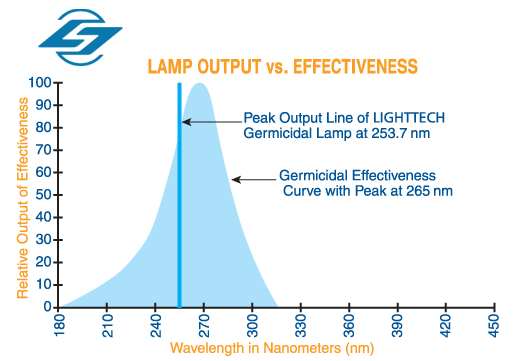
How 254 nm UV Germicidal Lamps Work
LightSources low-pressure, mercury germicidal 254 nm UV lamps are specially engineered to produce the maximum amount of UV radiation, with 90% of the energy typically generated at 254nm. This radiation wavelength is very close to the peak of the germicidal effectiveness curve of 265nm, the most lethal wavelength to microorganisms. UV 254 nm light is proven to destroy bacteria and viruses by altering the DNA of the cells of harmful contaminants, even microorganisms invisible to the naked eye.
The UV radiation penetrates through the cell to be absorbed by the nucleic acid which rearranges the genetic information and interferes with the cell’s ability to reproduce. A cell that cannot reproduce is unable to multiply to infectious numbers and is considered dead and harmless.
UV disinfection technology is not new, although UVC germicidal lamps became much more widely used during the COVID-19 pandemic. According to an article at UVReporter.com, LightSources is quoted as saying that UVC light is “known to be highly effective against all known harmful pathogens”, including the SARS-CoV-2 virus, and can be a cost-effective solution to help prevent infection in many applications.
Germicidal 254 nm UV lamps should be viewed as an effective tool for infection prevention although they do not replace traditional cleaning methods and personal hygiene recommendations such as covering your mouth when coughing and handwashing.
254 nm UV Lamp Glass Types
Germicidal 254 nm UV lamps are produced in three main types of glass:
- Fused Quartz, L & VH Types
- “L” type of fused quartz lamps are doped with titanium which blocks the transmission of 185nm radiation for low-ozone applications. “L” or low ozone lamps transmit up to 90% of their energy at the 254nm wavelength.
- “VH” types are produced using clear fused quartz and are not doped to allow transmission of both 185nm and 254nm for “very high” ozone-producing applications.
- Synthetic Fused Quartz
- Higher transmission of 185 nm for very high ozone-producing applications.
- Soft Glass
- Lower cost, soda-lime glass is designed to transmit UV radiation in the 254 nm region only.
In applications that require moderate amounts of ozone, the high-tech engineers at LightSources custom splice the two types of quartz together to form a custom “L” to “VH” ratio according to the customer’s specific requirements.
Standard quartz germicidal lamps are the oldest and most established type of 254 nm UV lamps with the best electrical efficiency, although are limited in UVC output when the ambient temperature exceeds 40° C.
High-output germicidal quartz lamps emit up to 66% more UV output than standard lamps of the same length, with the same limitations in regard to ambient temperature. They typically operate between 600 mA and 800 mA in T5 (15mm) and T6 (19mm) OD.
Low-pressure amalgam lamps are designed for stable operation over wide ambient temperature ranges and offer up to 3x the UV-C output of comparable standard lamps of the same length.
185 nm Ozone Generating Lamps

- “VH” (or Very High ozone-producing lamps) generate energy at 185nm in addition to the 254nm wavelength.
- UV emission at 185nm produces abundant amounts of ozone in the air. Ozone is an extremely active and effective oxidizer, destroying microorganisms as well as acting as a deodorizer.
- A primary advantage of the ozone generated by LightSources UV germicidal lamps is that it can be carried through the air into places not easily reachable by direct UV exposure.
Germicidal UV Lamp Applications
Germicidal 254 nm UV lamps and 185nm ozone lamps are used extensively in many applications and environments such as:
- Air disinfection
- Water disinfection
- Municipal drinking water facilities
- Wastewater
- Groundwater remediation industries
- Surface disinfection
- Restaurants, food, and beverage
- HVAC (Heating, Ventilation, and Air Conditioning)
- Hospitals and medical applications
- Pharmaceutical
- Semiconductor disinfection
UV germicidal lamps by LightSources are critical components providing disinfection to these industries and many others.
Interested to learn more? Check our education section and find out the many advantages of UVC radiation.
How do OEMs choose between ozone-free and ozone-generating 254 nm lamps?
Most OEMs decide by asking two questions: does the system need ozone, and will people or products be exposed to it?
- Ozone-free “L” quartz or soft glass: for water, surface, and food systems, and for any fixture where ozone could reach people or products. “L” quartz blocks 185 nm and transmits up to 90% of its energy at 254 nm.
- Ozone-generating “VH” quartz: for air deodorizing and odor control in ducts and enclosed systems, where ozone can reach areas that direct UV does not.
- Custom “L” to “VH” ratio: for systems that need a moderate, set amount of ozone. LightSources splices the two quartz types into one lamp.
- Sleeves: a “VH” lamp inside a sleeve that blocks 185 nm will not make ozone, so ozone systems need a sleeve that passes 185 nm. See UV quartz sleeves.
- Ozone removal: ozone-free 254 nm lamps can also break down leftover ozone in water.
Related lamp pages: UVC ozone lamps, low pressure mercury lamps.
How does LightSources work with OEMs on 254 nm lamp designs?
LightSources and LightTech build standard and custom 254 nm UV lamps for OEMs of water, air, and surface disinfection systems, matching glass type, ozone output, length, current, and base to each design. LightSources builds custom lamps through its OEM custom lamp design and Rapid Prototype Program under an ISO 9001:2015 registered quality system. Talk to Our Engineering Team about 254 nm lamps for your next system.
| Preheat Start Lamps Low Ozone | TubeDiameter | BF – BF | ArcLength | Power¹ | Current | Voltage¹ | UV output¹@ 254nm | |
|---|---|---|---|---|---|---|---|---|
| mm | mm | mm | W | mA | V | µW/cm² | W | |
| GPH212T5L | 15 | 212 | 132 | 10 | 425 | 25 | 27 | 2.7 |
| GPH287T5L | 15 | 287 | 207 | 14 | 425 | 34 | 40 | 4 |
| GPH303T5L | 15 | 303 | 223 | 15 | 425 | 35 | 43 | 4.3 |
| GPH357T5L | 15 | 357 | 277 | 17 | 425 | 42 | 57 | 5.7 |
| GPH436T5L | 15 | 436 | 356 | 21 | 425 | 51 | 72 | 7.3 |
| GPH793T5L | 15 | 793 | 713 | 38 | 425 | 92 | 125 | 13.5 |
| GPH843T5L | 15 | 843 | 762 | 41 | 425 | 98 | 150 | 16 |
| GPH1148T5L | 15 | 1148 | 1067 | 55 | 425 | 135 | 180 | 22 |
| GPH1554T5L | 15 | 1554 | 1474 | 75 | 425 | 179 | 240 | 33 |
| GPH1630T5L | 15 | 1630 | 1550 | 79 | 425 | 189 | 252 | 34.5 |
| Preheat Start Lamps Ozone Generating | TubeDiameter | BF – BF | ArcLength | Power¹ | Current | Voltage¹ | UV output¹@ 254nm | |
|---|---|---|---|---|---|---|---|---|
| mm | mm | mm | W | mA | V | µW/cm² | W | |
| GPH212T5VH | 15 | 212 | 132 | 10 | 425 | 25 | 27 | 2.7 |
| GPH287T5VH | 15 | 287 | 207 | 14 | 425 | 34 | 40 | 4 |
| GPH303T5VH | 15 | 303 | 223 | 15 | 425 | 35 | 43 | 4.3 |
| GPH357T5VH | 15 | 357 | 277 | 17 | 425 | 42 | 57 | 5.7 |
| GPH436T5VH | 15 | 436 | 356 | 21 | 425 | 51 | 72 | 7.3 |
| GPH793T5VH | 15 | 793 | 713 | 38 | 425 | 92 | 125 | 13.5 |
| GPH843T5VH | 15 | 843 | 762 | 41 | 425 | 98 | 150 | 16 |
| GPH1148T5VH | 15 | 1148 | 1067 | 55 | 425 | 135 | 180 | 22 |
| GPH1554T5VH | 15 | 1554 | 1474 | 75 | 425 | 179 | 240 | 33 |
| GPH1630T5VH | 15 | 1630 | 1550 | 79 | 425 | 189 | 252 | 34.5 |
| Instant Start Lamps Low Ozone | TubeDiameter | BF – BF | ArcLength | Power¹ | Current | Voltage¹ | UV output¹@ 254nm | |
|---|---|---|---|---|---|---|---|---|
| mm | mm | mm | W | mA | V | µW/cm² | W | |
| G10T5L | 15 | 357 | 277 | 17 | 425 | 42 | 57 | 5.7 |
| G24T5L | 15 | 692 | 612 | 32 | 425 | 77 | 95 | 11 |
| G36T5L | 15 | 843 | 762 | 41 | 425 | 98 | 150 | 16 |
| G48T5L | 15 | 1148 | 1067 | 55 | 425 | 135 | 180 | 22 |
| G64T5L | 15 | 1554 | 1474 | 75 | 425 | 179 | 240 | 33 |
| G67T5L | 15 | 1630 | 1550 | 79 | 425 | 189 | 252 | 34.5 |
| Instant Start Lamps Ozone Generating | TubeDiameter | BF – BF | ArcLength | Power¹ | Current | Voltage¹ | UV output¹@ 254nm | |
|---|---|---|---|---|---|---|---|---|
| mm | mm | mm | W | mA | V | µW/cm² | W | |
| G10T5VH | 15 | 357 | 277 | 17 | 425 | 42 | 57 | 5.7 |
| G24T5VH | 15 | 692 | 612 | 32 | 425 | 77 | 95 | 11 |
| G36T5VH | 15 | 843 | 762 | 41 | 425 | 98 | 150 | 16 |
| G48T5VH | 15 | 1148 | 1067 | 55 | 425 | 135 | 180 | 22 |
| G64T5VH | 15 | 1554 | 1474 | 75 | 425 | 179 | 240 | 33 |
| G67T5VH | 15 | 1630 | 1550 | 79 | 425 | 189 | 252 | 34.5 |
This post is also available in:
 Chinese (Simplified)
Frequently asked questions

These answers cover common questions about 254 nm UV lamps.
Why do germicidal lamps use 254 nm when the germicidal peak is near 265 nm?
Because 254 nm is the UV line that low-pressure mercury produces efficiently. Mercury vapor gives off its strongest UV line at 253.7 nm, and LightSources low-pressure mercury lamps convert about 40% of electrical power to UVC at 254 nm. That line sits close to the 265 nm peak of the germicidal effectiveness curve, so it is highly effective against bacteria and viruses.
Does 254 nm UV light pass through glass or plastic?
Not through most ordinary materials. Window glass and most plastics, including clear acrylic, block UVC even when they look clear (Health Physics Society). Germicidal lamps and the sleeves around them are made of quartz because quartz transmits UVC, and UVC cannot treat microorganisms behind a plastic cover. See UV quartz sleeves.
Can 254 nm UV lamps break down ozone?
Yes. UVC at 254 nm splits ozone back into oxygen, so ozone-free 254 nm lamps are used to remove leftover dissolved ozone from water after ozone treatment (General FAQs; Trojan Technologies).
What precautions do 185 nm ozone-generating lamps need?
Keep the ozone where it is meant to work. Ozone irritates the eyes and lungs, and OSHA limits worker exposure to 0.1 ppm averaged over an 8-hour shift (OSHA; NIOSH). Ozone-generating lamps belong in ducts, enclosed air handlers, and water systems where the ozone is contained or broken down before air reaches people. Ozone-free lamps are used where people are nearby.
References
- LightSources. General FAQs. light-sources.com
- Health Physics Society. Ask the Experts, Question 12178: UV-C and acrylic plastic. hps.org
- Trojan Technologies. Ozone reduction. trojantechnologies.com
- OSHA. Standard interpretation, September 29, 1994: ozone exposure limits. osha.gov
- NIOSH. Pocket Guide to Chemical Hazards: Ozone. cdc.gov
LAMP PRODUCT DATA:
LAMP APPLICATIONS:
LightSources and LightTech design and manufacture 254 nm UV lamps in ozone-free and ozone-generating quartz and in soft glass, with custom “L” to “VH” quartz ratios for OEM water, air, and surface disinfection systems. LightSources lamps are made under an ISO 9001:2015 registered quality system. Contact Us to learn more about LightSources ozone-free and ozone-generating 254 nm UV lamps.
This post is also available in:
Chinese (Simplified)