

UV light for aquariums uses germicidal UVC, most commonly at 254 nm, to reduce waterborne microorganisms as circulating water passes through a treatment chamber. LightSources engineers UVC lamps for OEM aquarium and aquaculture equipment used in commercial aquariums, recirculating aquaculture systems (RAS), hatcheries, fish farms, research facilities, and other aquatic-water applications.
Germicidal UVC used for water treatment is different from visible aquarium lighting used to illuminate fish, corals, or plants. In a UV water-treatment system, performance depends on flow rate, delivered dose, water clarity, suspended solids, lamp output, quartz-sleeve condition, chamber geometry, and maintenance.
Learn more about UV dose, reactor design, pretreatment, lamp selection, and validation in our guide: UV Water Purification.
How UV Light for Aquariums Works
Aquarium UV treatment works by moving water through a chamber where germicidal UVC exposure is controlled by lamp output, water quality, flow, and chamber design.
The NCBI Bookshelf chapter on aquatic housing systems describes UV units in which water passes through a treatment tube containing a UVC lamp protected by a quartz sleeve. It identifies lamp intensity, UV transmittance, exposure time, and the microorganisms being treated as important factors in UV performance, along with quartz-sleeve cleanliness and lamp condition over time.
Only the water that passes through the treatment chamber receives that exposure. Microorganisms attached to fish, tank surfaces, sediment, or biofilm are not directly treated unless they enter the circulating water and pass through the UVC zone.
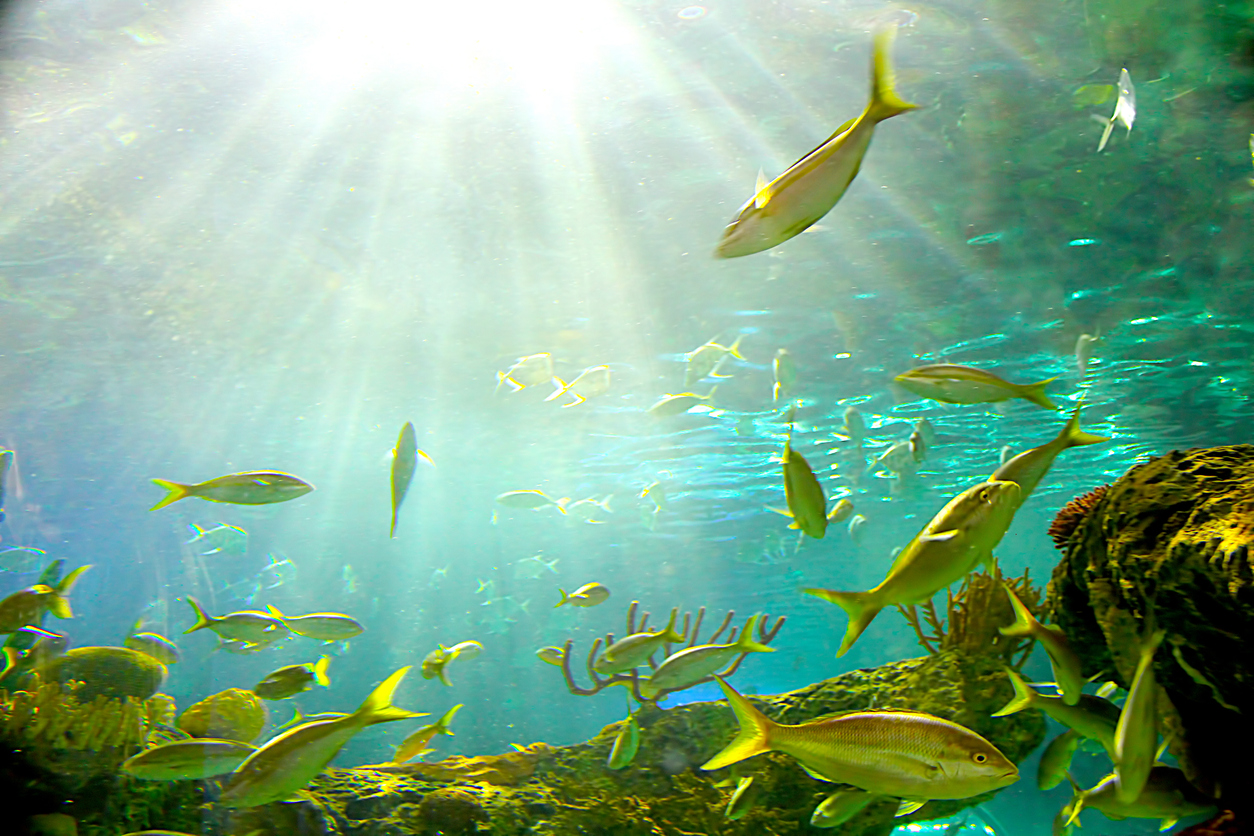
UV light for aquarium disinfection is therefore most useful as one part of a broader water-management system that also addresses filtration, biofiltration, oxygenation, and routine husbandry.
UVC 254 nm and Delivered Dose
UVC 254 nm is the primary wavelength used in conventional aquarium and aquaculture UV disinfection systems. LightSources low-pressure mercury lamps convert about 40% of electrical power to UVC at 254 nm for germicidal applications.
The practical question is not simply how much lamp power is installed. It is how much UVC reaches the water at the rated flow. Exposure time, UV transmittance, chamber geometry, lamp position, quartz transmission, and hydraulic distribution all contribute to the delivered dose.
What UVC Treats in the Water Stream
UVC can reduce susceptible waterborne bacteria, viruses, protozoa, and free-floating algae when they pass through the treatment chamber at an appropriate dose.
It does not make the entire aquarium or culture system pathogen-free. FAO aquaculture guidance notes that UV effectiveness depends on water clarity and the condition of the irradiation source, and that microorganisms can persist elsewhere in a recirculating system. UV also does not replace solids removal, biological filtration, oxygenation, or other water-quality controls.
UV Performance in Aquatic Systems
Consistent UV performance comes from controlling the water that reaches the chamber, not from selecting a lamp by tank volume alone.
Flow Rate and Exposure
Flow rate changes the time water spends in the UVC field. In a fixed chamber, higher flow can reduce exposure unless lamp output or chamber geometry is adjusted to maintain the required dose.
Aquarium and aquaculture UV equipment should therefore be rated around actual recirculating flow and the treatment objective. FAO technical guidance identifies water flow rate, UV dose, and water transmission as key factors that influence UV effectiveness in aquaculture water treatment.
Water Clarity, Filtration, and UV Transmittance
Clearer water allows UVC to travel farther through the treatment chamber. Suspended solids, turbidity, color, and dissolved or organic material can reduce transmission and shield microorganisms from exposure.
Mechanical filtration before UV is important in many aquarium and RAS designs because it removes particles before they reach the chamber. Cleaner water helps maintain more predictable UVC transmission and can also reduce fouling on the quartz sleeve.
System Placement and Recirculation
UV light for aquariums performs best where the system can deliver a predictable, filtered flow through the chamber and return treated water without significant bypass.
In RAS equipment, UV is often positioned after solids removal or other conditioning steps so the water reaching the chamber is more consistent. The best location still depends on the purpose of the unit, whether that is inlet-water treatment, side-stream control, full-loop recirculation, or protection of a specific production stage.
Maintenance and Monitoring
Lamp output, quartz-sleeve cleanliness, flow, water clarity, and electrical operation all affect aquarium UV performance over time.
Quartz sleeves can accumulate mineral scale, biofilm, algae, and organic deposits that reduce UVC transmission. Lamp output also changes over operating life. OEM maintenance instructions should define cleaning, inspection, lamp replacement, alarm response, and any sensor or operating-hour checks required for the equipment.
Choosing UVC Lamps for Aquarium Equipment
Selecting a UVC lamp for aquarium equipment starts with the required flow and dose, then works through chamber dimensions, water quality, operating temperature, electrical architecture, and maintenance access.
Low-Pressure Mercury Lamps
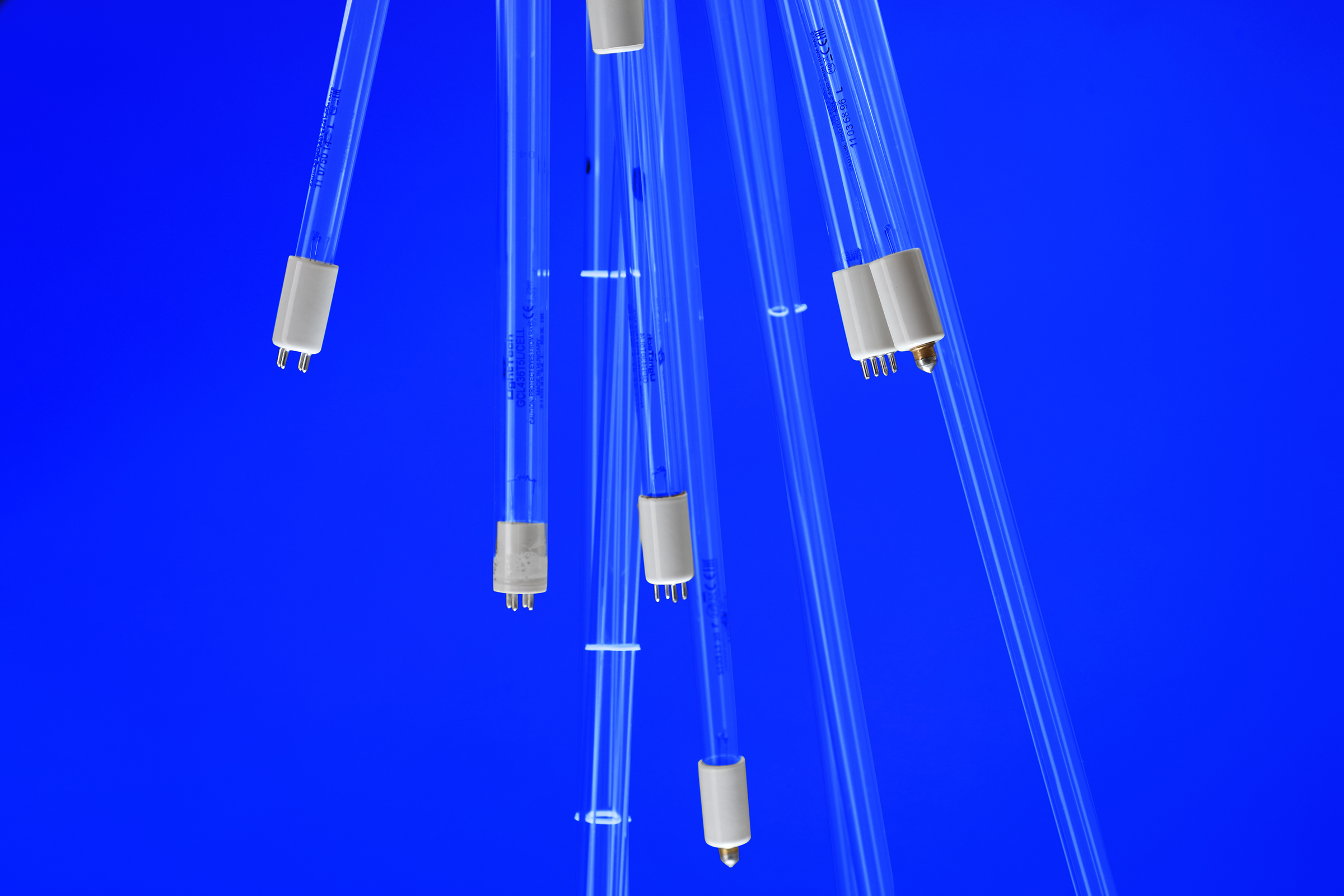
LightSources low-pressure mercury lamps are well suited to aquarium and aquaculture equipment where efficient 254 nm output, available lamp length, and the required lamp count fit the equipment footprint. They can be used in compact aquarium products as well as larger multi-lamp water-treatment systems.
Low-pressure lamp performance also depends on electrical drive and operating temperature, so the lamp should be evaluated together with the ballast, chamber geometry, quartz sleeve, and expected duty cycle.
Low-Pressure Amalgam Lamps
LightSources low-pressure amalgam lamps provide up to 3x the UVC output of comparable standard lamps of the same length. That additional output can support greater recirculating flow or reduce lamp count in larger aquaculture equipment, but it does not automatically produce 3x the delivered dose.
The final result still depends on flow, UV transmittance, lamp placement, chamber hydraulics, quartz-sleeve condition, and controls. Amalgam lamps are most useful when the equipment benefits from higher UVC output within a defined footprint or continuous-duty operating strategy.
Quartz Sleeves and Ballast Integration
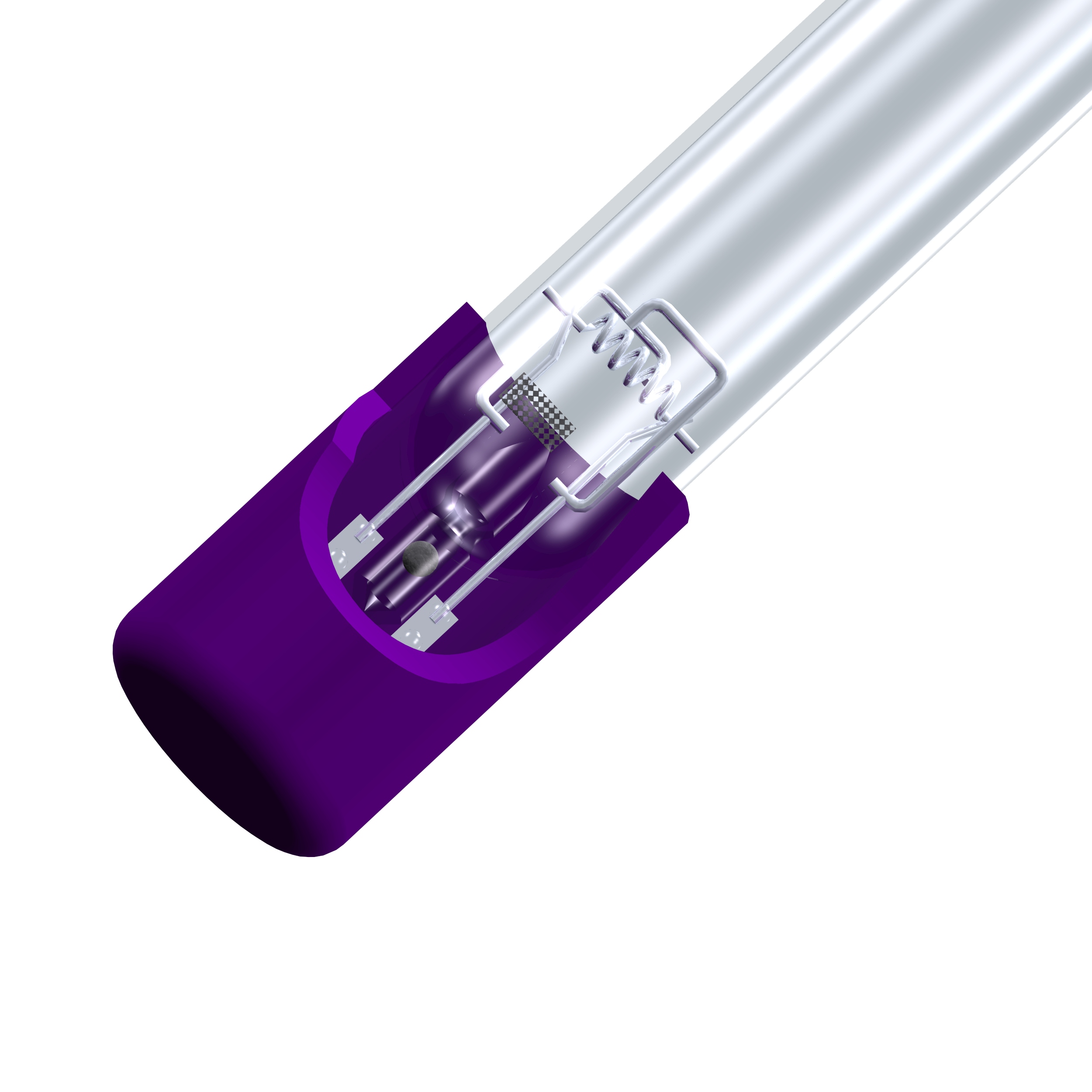
Quartz sleeves protect the lamp while transmitting UVC into the water, and the ballast provides the electrical conditions the lamp needs to operate correctly. Both should be considered early in the equipment design.
LightSources supports UV quartz sleeve configurations and electronic ballast integration for OEM systems where lamp current, startup behavior, thermal conditions, quartz transmission, and service access must work together.

Aquarium and Aquaculture Applications
Aquarium and aquaculture systems can use the same germicidal wavelength while requiring very different lamp configurations, flow rates, maintenance strategies, and levels of biosecurity.
Residential and Commercial Aquarium Equipment
Residential and commercial aquarium equipment may use UVC to reduce free-floating microorganisms and algae in a recirculating water loop. The treatment unit should be sized around actual flow and water clarity, with practical access for lamp replacement and quartz-sleeve cleaning.
For compact aquarium equipment, including products described as UV light for fish tanks, the chamber must still provide enough exposure at the rated flow. Tank volume helps define circulation needs, but it does not replace dose, flow, and water-quality calculations.
Recirculating Aquaculture Systems (RAS)
RAS UV treatment reduces microbial loads in recirculating water after filtration and other conditioning stages. These systems often run continuously, so stable lamp output, predictable flow, service access, and replacement availability can factor into the equipment-design decision.
UV lamps for aquaculture work best when solids and organic material are controlled before water reaches the chamber. That gives the lamp a more consistent water matrix and helps preserve UVC transmission.
Hatcheries and Fish Farms
Hatchery UV water treatment and fish farm UV systems may use UVC disinfection for intake water, recirculating loops, or water moving between production stages where reducing waterborne microorganisms supports the biosecurity plan.
UV is only one part of that plan. Stocking density, source water, solids load, temperature, filtration, oxygenation, biofiltration, and disease-management practices all influence the condition of the culture system.
Freshwater and Marine Systems
UVC can be used in both freshwater and marine systems, but the equipment must be designed for the specific water conditions. Salinity, corrosion potential, water temperature, source-water quality, and the overall treatment process can all affect component selection, system design, and maintenance needs.
In marine applications, material compatibility and corrosion resistance become especially important, while both freshwater and saltwater systems benefit from consistent filtration and predictable water conditions before the water reaches the UV chamber.
Filtration, Biofiltration, and Ozone
Filtration, biofiltration, ozone, and UV serve different purposes in aquatic-water systems. An effective treatment design gives each process a clear role and positions it where it can operate under suitable water conditions.
Mechanical Filtration Before UV
Mechanical filtration removes particles that can absorb or scatter UVC or shield microorganisms from exposure. Cleaner water entering the UV chamber improves treatment consistency and helps reduce deposits on the quartz sleeve.
For recirculating aquaculture systems, placing UV after effective solids removal can provide a more consistent water stream for treatment.
Biofiltration and Beneficial Bacteria
Biological filtration manages dissolved nitrogen compounds through established microbial communities growing on filter media. A properly configured flow-through UV unit primarily treats microorganisms suspended in the water that pass through the treatment chamber, rather than the established biofilm attached to the biological filter.
Free-floating beneficial bacteria can still enter the UV chamber and receive UVC exposure. UV placement and flow should therefore be considered as part of the overall filtration and biofiltration strategy.
Ozone Integration
Ozone and UV can be used as separate treatment stages in aquatic-water systems, with each serving a different purpose. Ozone can support oxidation and water-quality management, while UVC provides a physical disinfection step for water passing through the UV chamber.
A useful real-world example is the NOAA Fisheries Southwest Fisheries Science Center experimental aquarium. Its seawater treatment process uses sand filtration followed by ozone and UV treatment, then activated carbon before the water is conditioned and delivered to the aquarium. NOAA also operates a separate recirculating aquaculture system at the facility that combines mechanical and biological filtration with UV treatment, additional filtration, temperature control, and degassing.
For OEM equipment that requires ozone production, LightSources offers ozone-generating UVC lamps designed to transmit 185 nm. LightSources also works with OEMs on custom UV lamp configurations, including specialized wavelength output and custom phosphor blends, to meet specific application and equipment requirements.
Frequently Asked Questions About UV Light for Aquariums and Aquaculture
These frequently asked questions cover common sizing, placement, and performance considerations for aquarium UV water treatment and aquaculture UV disinfection systems.
How do you size UV light for an aquarium or aquaculture system?
Sizing UV lamps for aquariums starts with how much water the system needs to treat and the level of microbial control required. Flow rate, water clarity, or UV transmittance, targeted microorganisms, and chamber design all affect the germicidal dose the system can deliver, so tank volume or lamp wattage alone is not enough.
The UV lamp design should also account for lamp aging, quartz-sleeve fouling, operating temperature, ballast performance, service access, and whether the system treats the full recirculating flow or only a side stream.
How does flow rate affect UV disinfection in aquariums?
Higher flow gives the water less time in the UV chamber, which can reduce the dose it receives. The system must therefore balance flow rate, lamp output, and chamber design to maintain the required treatment level at the rated flow.
For systems with changing flow rates, the equipment should have a clearly defined operating range. Lower flow can increase UV exposure, but the final system rating should be based on the equipment’s complete design and performance, not lamp wattage alone.
Where should UV lamps be installed in a recirculating aquaculture system?
UV lamps for aquaculture are commonly installed after mechanical filtration so clearer water enters the treatment chamber. The best location depends on whether the goal is intake-water treatment, side-stream control, full-loop recirculation, or protection of a specific production stage.
The equipment layout should also minimize untreated bypass flow and provide practical service access for quartz cleaning, lamp replacement, and monitoring.
Does UV harm beneficial bacteria in an aquarium biofilter?
A flow-through UV unit mainly affects microorganisms suspended in the water that pass through the treatment chamber, not the established biofilm attached to biological filter media.
Some free-floating beneficial bacteria can still receive UVC exposure if they enter the chamber. That is why UV lamp placement and flow should be considered together with the aquarium biofiltration strategy.
How do turbidity and water clarity affect aquarium UV performance?
Turbidity and suspended solids can reduce aquarium UV performance by absorbing or scattering UVC and shielding microorganisms from exposure.
Mechanical filtration and regular quartz-sleeve cleaning help maintain more predictable UVC transmission. Systems with variable solids loading should be sized and maintained for the poorest water-quality conditions the equipment is expected to treat.
OEM UV Lamp Engineering for Aquatic Systems
LightSources works with aquarium and aquaculture OEMs on lamp selection, custom geometry, ballast and quartz integration, prototyping, production scale-up, and long-term replacement supply.
Additional engineering information is available for OEM teams developing aquatic and water-treatment equipment:
- OEM UV Lamp Engineering Partner for design-stage collaboration and program support.
- UV Lamp Applications for OEM Systems for application and integration considerations.
- UV Lamp Engineering Capabilities for custom lamp development, prototyping, and production support.
For aquarium, RAS, hatchery, or fish-farm equipment programs, talk to our Engineering Team to discuss lamp output, geometry, ballast compatibility, quartz integration, operating conditions, and lifecycle requirements.

UVC Lamps for Aquarium and Aquaculture Systems
Reliable UV light for aquariums and aquaculture comes from matching the lamp to the water, flow, chamber geometry, filtration, maintenance plan, and treatment objective. Defining those conditions early gives OEM teams a clearer path to a UVC lamp platform that fits the equipment and can be supported through production and replacement supply.
LAMP PRODUCT DATA:
LAMP APPLICATIONS:
LightSources engineers UVC lamps around the electrical, thermal, optical, mechanical, and lifecycle needs of OEM aquarium and aquaculture equipment. Standard and custom lamp development supports programs from prototype through production and replacement supply. Contact LightSources to discuss OEM lamp requirements for UV light for aquariums and aquaculture systems.
This post is also available in:
 Chinese (Simplified)