

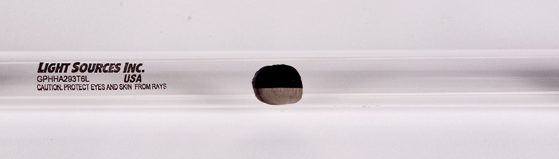
LightSources and LightTech manufacture standard and custom UV quartz sleeves and jackets that protect germicidal lamps, and the sleeve material determines how much UV-C reaches the target. High-purity fused quartz passes the 254 nm germicidal line with little loss, while the quartz grade and doping decide how much 185 nm passes and whether the lamp forms ozone.
UV Quartz Sleeves: a Smart Investment
The main purpose of quartz sleeves and jackets is to provide protection against air and water flow, breakage, leakage, and temperature fluctuations, as well as other environmental hazards. UV quartz sleeves provide this added protection without sacrificing lamp efficiency, making them a smart investment.
UV quartz sleeves can be applied to a range of germicidal UVC lamp types, including standard, high output (HO), and amalgam. Numerous options are available, including open or closed (domed) ends, fire-polished or saw-cut ends, and other custom shapes.
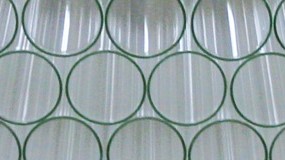
Quartz Sleeves: Protection in Any Application
LightSources offers quartz sleeves in a wide array of diameters and lengths to protect UV lamps in a variety of industrial applications. Quartz sleeves from LightSources are manufactured with the highest quality materials and components for use in:
- Air purification units
- Water disinfection units
- Surface disinfection systems
- Photochemical reactors
- Other specialized equipment
We work with OEMs to design, engineer, and manufacture the perfect UV lamp to suit individual needs with custom-designed quartz sleeves for long-lasting, added protection in any application.
Benefits of UV Quartz Sleeves
Quartz sleeves from LightSources offer many benefits, adding protection for UV bulbs without sacrificing lamp performance. Some of the most recognized benefits of quartz sleeves include:
- Long-lasting UV lamp protection
- Useful for applications in small spaces
- Innovative two-tube linear technology
- Top-quality materials and engineering
- Customized, proprietary design options
These benefits make quartz sleeves a wise investment, with added benefits realized when partnering with LightSources.
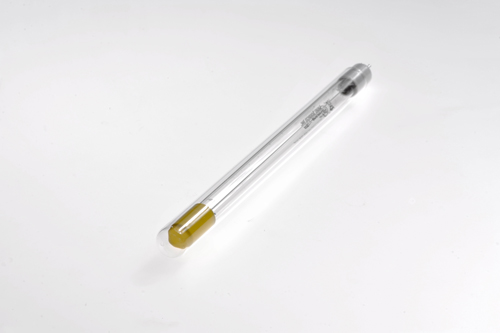
LightSources offers the technical expertise, capacity, and resources to respond quickly to OEMs’ unique requirements for any application.
LightSources: Quality Lamps and Quartz Sleeves
LightSources works with OEMs to design, engineer, and manufacture quality UV lamps customized to suit individual requirements. We offer proprietary lamp solutions with custom configurations, allowing our customers to maintain replacement sales within the OEM market. This is often an untapped source of tremendous revenue and repeat business.
The benefits, combined with exceptional service from a leading global lamp supplier, make quartz sleeves a worthwhile investment.
Quartz sleeves for germicidal UV lamps: standard sizes and end finishes
LightSources supplies quartz sleeves for standard, high-output, and amalgam germicidal lamps in 18 standard sizes, with inside diameters from 17 to 45 mm and wall thicknesses from 1.0 to 2.0 mm. Each sleeve can be ordered with open, closed (domed), flared, or beaded ends and a fire-polished finish. For OEM systems that fall outside the standard range, LightSources builds custom sleeve sizes to the lamp and housing.
Most Commonly Used Quartz Sleeves:| Inside Diameter | Outside Diameter | Wall Thickness |
| mm | mm | mm |
| 17.0 | 19.0 | 1.00 |
| 18.0 | 20.5 | 1.25 |
| 19.6 | 22.0 | 1.20 |
| 20.0 | 22.0 | 1.00 |
| 20.0 | 22.5 | 1.25 |
| 20.0 | 23.0 | 1.50 |
| 22.0 | 24.5 | 1.25 |
| 22.0 | 25.0 | 1.50 |
| 25.0 | 28.0 | 1.50 |
| 26.0 | 30.0 | 2.00 |
| 26.4 | 30.0 | 1.80 |
| 30.0 | 33.0 | 1.50 |
| 32.0 | 36.0 | 2.00 |
| 34.0 | 38.0 | 2.00 |
| 35.0 | 38.0 | 1.50 |
| 42.0 | 45.0 | 1.50 |
| 44.0 | 48.0 | 2.00 |
| 45.0 | 48.0 | 1.50 |
How does quartz grade affect UV-C transmission at 254 nm and 185 nm?
The quartz grade in a sleeve or lamp envelope decides which UV wavelengths pass through it. High-purity fused quartz transmits the 254 nm germicidal line with little loss, which is why LightSources uses it for germicidal sleeves and lamps.
Transmission at 185 nm depends on purity and doping. Three quartz types cover most germicidal uses:
- Natural fused quartz is melted from quartz crystal and passes 254 nm well. Trace impurities reduce its transmission at 185 nm.
- Synthetic fused silica is made from high-purity silicon compounds and transmits further into the deep UV, including 185 nm.
- Doped quartz, often titanium-doped, absorbs 185 nm while still passing 254 nm. This is the material used for ozone-free lamps and sleeves.
A sleeve also loses transmission as its surface fouls, so cleaning and replacement intervals affect the delivered dose as much as the starting material does.
What is the difference between ozone-free and ozone-generating quartz?
Ozone-generating lamps use quartz that passes the 185 nm line, which splits oxygen molecules and forms ozone. That ozone adds oxidation and odor control in air treatment and some water applications. Ozone-free lamps use doped quartz that blocks 185 nm, so the lamp emits 254 nm UV-C without forming ozone. Ozone-free lamps suit occupied spaces, HVAC coils, and any system where ozone is not wanted. LightSources manufactures both ozone-free and ozone-generating germicidal lamps.
The sleeve material should match the lamp. An ozone-free sleeve around an ozone-generating lamp will block the 185 nm output the lamp was chosen for.
Dan Spicer, Global Director of Sales at LightSources, co-authored peer-reviewed research with Clemson University on 185 nm output in low-pressure mercury lamps, published in the Journal of Water Process Engineering.
How do quartz sleeves work with high-output and amalgam lamps?
High-output and amalgam lamps run at higher power and temperature than standard lamps, so the sleeve diameter and the air gap around the lamp affect operating temperature and UV-C output. LightSources supplies sleeves for standard, high-output, and amalgam lamps. LightSources high-output quartz lamps yield up to 66% more UV output than standard lamps of the same length. LightSources pellet-amalgam lamps provide up to 3x the UV-C output of comparable standard lamps of the same length.
What else in the lamp assembly affects germicidal output?
The sleeve is one part of an assembly that also includes reflectors, housings, and the thermal path around the lamp. Reflectors made for UV-C redirect output toward the target, while housings keep stray UV-C in and moisture out. Temperature control keeps the lamp near the point where it produces its rated UV-C. The FAQ below covers each of these in more detail.
Quartz sleeve and UV lamp FAQ
How to choose lamp glass and coatings for optimal UV transmission?
Choose the glass by the wavelengths the application needs. High-purity fused quartz is the standard for 254 nm germicidal output, doped quartz blocks 185 nm for ozone-free operation, and soft glass suits lower-power compact lamps. Coatings extend useful output: LightSources LongLife+ is a proprietary coating designed to reduce accelerated output depreciation in germicidal lamps.
How to manage quartz sleeve fouling in wastewater UV systems?
Fouling comes from minerals, iron, and organic matter building up on the sleeve, which lowers the UV-C dose that reaches the water. Operators manage it with mechanical wipers, chemical cleaning on a schedule set by water quality, and UV intensity sensors that show when transmission has dropped. Replace sleeves that cannot be cleaned back to clear transmission or that show etching or cracks.
What are typical failure modes in quartz germicidal lamps and how to prevent them?
Common failure modes are output loss as the quartz solarizes and the electrodes wear, end blackening, electrode failure from frequent switching, seal and base failure from heat or moisture, and breakage from thermal or mechanical shock. Prevention starts with a matched ballast, a stable operating temperature, limited on-off cycling, and a protective quartz sleeve. LightSources LongLife+ technology addresses accelerated depreciation.
What are recommended materials for UV reflectors to maximize germicidal output?
Specially finished aluminum and PTFE-based materials both reflect a large share of 254 nm UV-C. Standard polished metals and most paints reflect far less at germicidal wavelengths, so specify the reflector material for UV-C performance rather than visible-light appearance.
What is the impact of reflector design on UV germicidal effectiveness?
Reflector design decides how much of the lamp’s UV-C reaches the target and how evenly it arrives. The reflector’s shape redirects output that would otherwise go to the back of the fixture, which raises the dose at the target without adding lamp power. A poorly matched design leaves hot spots and shadowed areas that receive too little dose.
How to choose reflectors and housings to maximize UV output while ensuring safety?
Choose reflectors for UV-C reflectance and a shape that directs output at the target. Choose housings that contain stray UV-C, resist UV degradation, and carry the IP rating the environment needs. Interlocks, shielding, and UV-resistant gaskets protect people and nearby materials.
What are the typical IP ratings needed for UV fixtures in wet environments?
The IP rating follows the exposure. Fixtures in damp or washdown areas commonly specify IP65 to resist water jets, fixtures that may be briefly submerged specify IP67, and components designed for continuous immersion specify IP68. In water systems, the quartz sleeve and its seals form the barrier between the lamp and the water.
What is the role of thermal management in high-output UV lamp assemblies?
Thermal management keeps a high-output lamp near the temperature at which it produces its rated UV-C. Standard low-pressure mercury lamps lose output when the lamp wall runs too hot or too cold, which is why amalgam lamps are used where temperatures run high or vary. Airflow, sleeve spacing, and ballast placement all affect lamp temperature and life.
What role do ceramic components play in high-temperature lamp reliability?
Ceramic bases and components keep their shape and electrical insulation at the temperatures high-output and amalgam lamps reach. Plastic parts in the same position can soften, crack, or degrade under heat and UV-C exposure. Ceramic parts help keep lamp connections stable over the rated life.
LAMP PRODUCT DATA:
LAMP APPLICATIONS:
LightSources and its affiliated companies, LCD Lighting and Voltarc, work with strategic partners LightTech and Cerlux to design and manufacture specialty lamps for OEM equipment. The LightSources team develops custom lamp solutions and proprietary technologies, including UV quartz sleeves matched to each lamp and housing. Contact Us to learn more about LightSources UV quartz sleeves.