

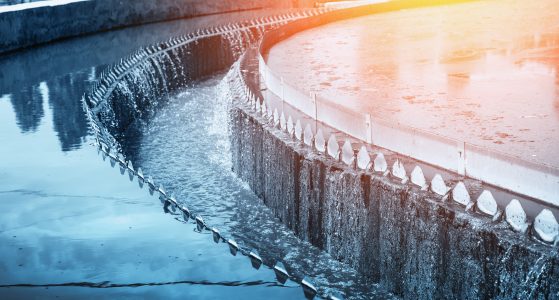
Water reclamation treats used water so it can be reused for another beneficial purpose, and UV disinfection often serves as one microbial barrier in that treatment train. LightSources engineers UVC lamps for OEM water reclamation equipment, matching lamp technology to flow, UV transmittance, dose requirements, reactor geometry, and service conditions.

Potable and non-potable reuse require different treatment approaches, so the complete treatment train is designed around the source water, the intended end use, and the applicable requirements. The UV lamp is one part of that system, and LightSources works with OEM teams to align the light source with the reactor’s electrical, mechanical, thermal, optical, and lifecycle requirements.
For broader guidance on dose, reactor design, and lamp selection, see UV water purification. For a closer look at how dose, flow, and water quality interact, read Understanding UV Water Disinfection.
What is water reclamation?
Water reclamation is the treatment of wastewater or another used-water source to a quality appropriate for a new use. Water reuse is the beneficial use that follows, such as irrigation, industrial operations, onsite non-potable service, environmental applications, or drinking-water supply.
Treatment requirements vary with the source water and the intended end use, as EPA’s basic information on water reuse explains. A reclamation train may combine biological treatment, solids removal, filtration, membranes, UV disinfection, chemical disinfection, advanced oxidation, or other barriers.
That fit-for-purpose approach matters because water used for landscape irrigation does not have the same treatment requirements as water intended for industrial processing or potable reuse. UV should be specified as part of the complete treatment train, with its role defined before lamp and reactor decisions are made.
How does UV disinfection support water reclamation?
UV disinfection supports water reclamation by exposing waterborne microorganisms to a controlled UVC dose before the water moves to its next use or treatment step. UVC energy damages microbial nucleic acids and interferes with replication. The treatment the reactor actually delivers depends on lamp output, water quality, flow, hydraulics, and controls working together.
UV is among the disinfection technologies addressed in EPA’s Guidelines for Water Reuse. The final design still has to account for the microbial treatment target, water quality, flow, monitoring strategy, and operating limits that apply to the finished system.
UVC 254 nm and delivered dose
UVC 254 nm is widely used for microbial control in water-treatment equipment. The practical design question is not lamp wattage alone.
Flow rate affects exposure time, while UV transmittance determines how readily UVC passes through the water. Reactor geometry, lamp position, hydraulic distribution, quartz transmission, lamp aging, and sensor response also influence the dose received across the moving water stream.
A higher-output lamp provides more available UVC, but it does not automatically establish a higher validated dose throughout the reactor. Review UV disinfection water treatment for more on how lamp output relates to delivered dose.
Pretreatment, UV transmittance, and fouling
Reclaimed water can contain suspended solids, dissolved material, color, minerals, and organic matter that absorb or scatter UVC or contribute to fouling. Upstream treatment and realistic water-quality data are therefore central to reactor design.
Filtration and solids removal reduce particle shielding before UV treatment. The design should also account for scale and deposits on UV quartz sleeves, because fouling can reduce UVC transmission even when the lamp continues to operate.

Water reclamation equipment should be evaluated at the lowest expected UV transmittance, the highest intended flow, and a realistic fouling condition within its rated or validated operating range. Where reclamation begins with municipal or industrial effluent, review wastewater UV treatment for the solids loading, hydraulic, and maintenance considerations common to those streams.
Water reclamation applications
The intended reuse drives the treatment and monitoring strategy, so one treatment train does not fit every application. Centralized utilities, industrial plants, irrigation programs, and building-scale systems start from different source water and serve different levels of human and environmental exposure.
Those differences change the pretreatment, the microbial target, and the way UV equipment is sized and monitored.
Centralized non-potable reuse
Centralized non-potable reuse treats water at a utility or other central facility and distributes it for uses that do not require drinking-water quality. Applications can include fire protection, vehicle washing, street cleaning, commercial laundries, dust control, landscape irrigation, and other municipal or commercial uses.
UV can provide a microbial treatment barrier before distribution when the system is designed for the required water quality and reuse classification. Treatment performance depends on the complete equipment and the requirements of the applicable reuse program.
Industrial water reuse
Industrial water reclamation can reduce freshwater demand by treating water for reuse in cooling, manufacturing, process-water, wash-water, and other plant applications. The required quality depends on how the reclaimed water will be used and what it will contact.
UV equipment for industrial reuse should be selected around actual flow, source-water variability, UV transmittance, temperature, upstream filtration, fouling potential, and integration with the rest of the treatment train. LightSources provides additional guidance on industrial UV disinfection water treatment.
Irrigation and landscape reuse
Reclaimed water can be used for agricultural irrigation, landscape irrigation, nurseries, parks, and related applications when it is treated to the requirements established for the crop or landscape, exposure conditions, and local reuse program.
Water clarity and solids control remain important when UV is part of the treatment train. The design should also account for seasonal flow changes, storage conditions, downstream distribution, and the level of human contact associated with the intended use.
Environmental restoration and impoundments
Reclaimed water can also support wetlands, habitat restoration, ornamental impoundments, recreational water bodies, and other environmental uses. The required treatment depends on the source water, potential human and ecological exposure, storage conditions, and applicable local requirements.
Onsite non-potable reuse
Onsite systems collect and treat rainwater, stormwater, graywater, or building wastewater for reuse at a building or district scale. Common applications include toilet flushing, vehicle washing, irrigation, dust control, and other non-drinking uses.
Compact UV equipment still needs a defined treatment target, realistic peak flow, pretreatment, monitoring, service access, and a maintenance plan. The graywater and rainwater questions in the FAQ below cover two of the most common onsite systems.
Potable reuse
Potable reuse uses highly treated reclaimed water as part of a drinking-water supply. These systems rely on multiple treatment barriers, monitoring, and regulatory oversight rather than a single disinfection step.
UV may be one barrier within that broader treatment train, but the complete system must meet the applicable drinking-water and reuse requirements. For drinking-water-specific lamp and reactor considerations, see UV drinking-water disinfection.
How do regulations, microbial targets, and validation affect water reclamation?
Water reclamation requirements vary with source water, intended end use, jurisdiction, and the level of potential human or environmental exposure. Treatment requirements are set by the applicable reuse program, permits, regulations, and performance criteria rather than by one universal UV dose.
The United States has no federal water reuse regulations, so states develop their own. EPA’s REUSExplorer compiles state reuse regulations and guidelines by source water and end use for informational purposes, so project teams should verify the requirements that apply to each installation.
EPA’s 2025 Risk-Based Framework for Developing Microbial Treatment Targets for Water Reuse gives states and other jurisdictions scientific information for developing risk assessments and microbial treatment targets for potable and non-potable reuse. Its fit-for-purpose approach connects treatment goals to the intended reuse application.
The National Water Research Institute’s Ultraviolet Disinfection Guidelines for Drinking Water and Water Reuse give regulators and utilities a common basis for evaluating UV disinfection systems, including a methodology for validating reactor performance.
Where regulatory treatment credit or formal validation is required, it applies to the complete reactor and its approved operating conditions, not to the UVC lamp by itself. LightSources supports OEM system-level validation with designated samples, controlled production lots, and beta-site testing support.
Which UVC lamp technologies are used in water reclamation equipment?
Water reclamation equipment may use UVC germicidal lamp technologies including low-pressure mercury, high-output quartz, amalgam, and medium-pressure lamps.
The right platform depends on flow, reactor footprint, electrical architecture, temperature, water quality, service strategy, and the treatment objective.
Low-pressure mercury lamps
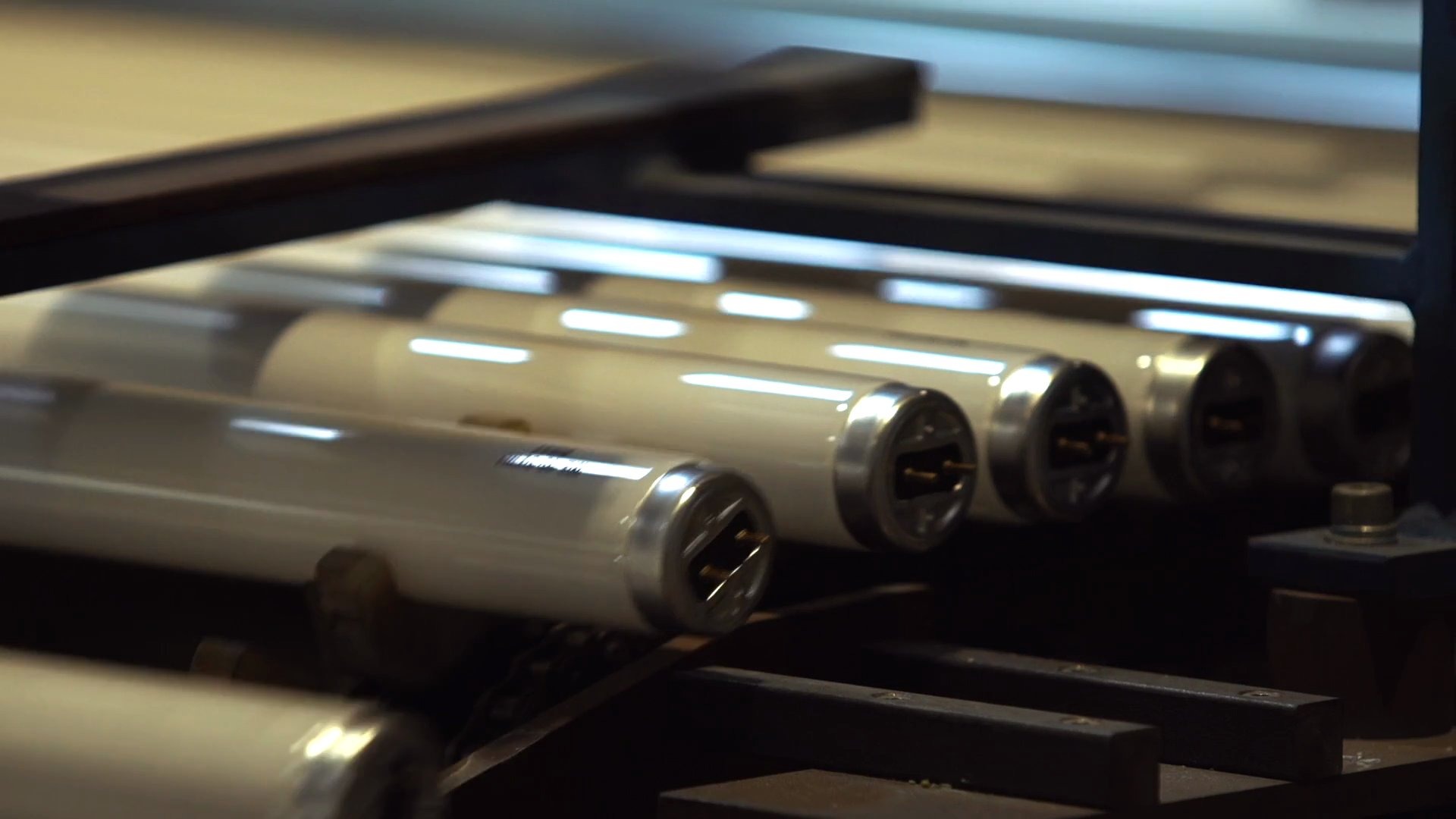
LightSources low-pressure mercury lamps provide 254 nm output for water-disinfection equipment where reactor length, lamp count, flow, and electrical design support the required treatment range. LightSources low-pressure mercury lamps convert about 40% of electrical power to UVC at 254 nm.
High-output quartz lamps
LightSources high-output quartz lamps provide up to 66% more UV output than standard lamps of the same length. This gives OEM designers additional flexibility when treatment capacity or equipment footprint calls for more output within an established lamp geometry.
The final reactor still has to be evaluated for delivered dose, heat, electrical requirements, quartz condition, and operating range. The lamp-output increase should not be treated as an equivalent increase in validated system dose.
Low-pressure amalgam lamps
LightSources low-pressure amalgam lamps can support higher-capacity equipment where greater UVC output is needed within a defined reactor footprint. LightSources pellet amalgam lamps provide up to 3x the UVC output of comparable standard lamps of the same length.
Higher lamp output can support greater treatment capacity or a lower lamp count in some designs, but it does not independently produce 3x the delivered reactor dose. Flow, UV transmittance, hydraulics, lamp placement, fouling, controls, and validation still determine complete-system performance.
Medium-pressure UV lamps
LightSources medium-pressure UV lamps provide high power density and broader spectral output for equipment where compact reactor geometry or higher flow makes that architecture appropriate. LightSources medium-pressure UV lamps range from 100 to more than 700 watts per inch.
Medium-pressure designs require coordinated review of electrical demand, heat load, cooling, quartz protection, ballast integration, service access, and the operating range used for system validation.
185 nm for specialized oxidation processes
Some water-reclamation equipment uses ozone generation or another photochemical process in addition to conventional microbial disinfection. LightSources ozone-generating UVC lamps pass 185 nm, while ozone-free lamp options block 185 nm.
The 185 nm wavelength should be treated as a separate process choice from conventional UVC 254 nm disinfection. Equipment using ozone or advanced oxidation must account for process chemistry, materials, ventilation, oxidation byproducts, monitoring, and downstream treatment.
Maintenance and long-term UV performance
Reliable water-reclamation performance requires maintenance of the complete UV system, not only periodic lamp replacement. Quartz fouling, sensor condition, lamp aging, ballast behavior, flow changes, and shifts in UV transmittance can all move the reactor away from its intended operating range.
Maintenance programs may include sleeve cleaning, UV sensor checks, lamp-status monitoring, alarm response, operating-hour tracking, inspection of electrical components, and replacement planning based on the OEM’s equipment design.
LightSources LongLife+ technology supports operating life of up to 16,000 hours and reduces output depreciation on high-intensity lamps. Actual service planning still depends on the lamp platform, duty cycle, ballast behavior, operating temperature, starts, fouling, validation factors, and the maintenance requirements of the finished equipment.
Frequently asked questions
OEM engineers and system designers often raise the following questions when they add UV disinfection to water reclamation and reuse equipment.
Where does UV disinfection fit in a water reclamation treatment train?
UV disinfection usually follows upstream treatment that has reduced solids and improved water clarity, so UVC can reach microorganisms more consistently. Its exact position depends on the treatment train, the source water, the intended end use, and whether additional treatment barriers are required before or after UV.
How does UV transmittance affect water reclamation performance?
Lower UV transmittance means less UVC passes through the water, which can reduce delivered dose at a given flow and lamp output. Reactor sizing should account for the lowest UV transmittance the equipment is expected to treat within its rated operating range.
How is UV designed for graywater recycling and reuse systems?
UV in a graywater reuse system is designed as a disinfection barrier after filtration, sized for peak flow and the lowest UV transmittance the treated graywater is expected to reach. Graywater from showers, sinks, and laundry can carry soaps, lint, hair, and organic matter that absorb UVC and foul quartz sleeves, so pretreatment comes first. The treatment target comes from the applicable reuse program, and EPA’s risk-based framework for water reuse includes log reduction targets for a range of onsite reuse configurations. LightSources works with OEMs to match lamp output, geometry, and service access to compact graywater equipment.
How are UV systems sized for rainwater harvesting and reuse?
UV systems for rainwater harvesting are sized to the peak flow the distribution pump delivers and to the lowest UV transmittance expected from stored water. Rainwater quality varies with roof material, first-flush diversion, storage time, and season, so sediment filtration ahead of the reactor helps protect transmittance and limit sleeve fouling. The required treatment level comes from the intended end use and the local reuse program. Intermittent, pump-driven operation also affects lamp and ballast planning, because start frequency and duty cycle influence lamp life.
Does UV disinfection remove chemicals from reclaimed water?
Conventional UVC disinfection is primarily a microbial treatment process and does not by itself remove dissolved salts, metals, or most chemical contaminants. Membranes, adsorption, oxidation, or other treatment processes may be required when chemical removal is part of the reclamation objective.
How do OEMs select a UV lamp for water reclamation equipment?
Lamp selection starts with the complete equipment requirements: source-water quality, minimum and peak flow, UV transmittance, and the treatment target. Reactor dimensions, thermal conditions, ballast architecture, quartz protection, controls, service access, and expected operating life then narrow the options. Together, those parameters guide the choice among low-pressure, high-output, amalgam, medium-pressure, or specialized lamp configurations.
How does LightSources support water reclamation OEMs?
LightSources supports water-treatment OEMs by co-engineering the UV lamp around the final reactor, power architecture, operating environment, and service strategy. Programs can begin with a standard lamp platform or a custom configuration and continue through prototyping, production, and long-term replacement supply.
For more detailed engineering and program information, review these LightSources resources:
- OEM UV lamp engineering partner for design-stage collaboration, prototyping, production, and lifecycle supply.
- UV lamp applications for OEM systems for liquid-disinfection and system-integration considerations.
- UV lamp engineering capabilities for custom geometry, electrical and thermal integration, and design support.
- Electronic ballasts for lamp-and-ballast compatibility within UVC equipment.
LightSources supports OEM programs through custom UV lamp design and its Rapid Prototype Program. Talk to Our Engineering Team to review lamp output, geometry, quartz protection, ballast compatibility, operating conditions, and lifecycle requirements for water reclamation equipment.
UVC lamps for water reclamation systems
Effective water reclamation depends on matching each treatment barrier to the source water and intended reuse. For UV equipment, that means coordinating lamp output with flow, UV transmittance, reactor geometry, quartz transmission, controls, maintenance, and the rated or validated operating range of the complete system.
LAMP PRODUCT DATA:
LAMP APPLICATIONS:
LightSources engineers UVC lamps around the electrical, thermal, optical, mechanical, and lifecycle needs of OEM water reclamation equipment. ISO 9001:2015 certified manufacturing, custom lamp development, and rapid prototype support carry programs from prototype through production and long-term replacement supply. Contact LightSources to discuss OEM lamp requirements for water reclamation and water reuse systems.
This post is also available in:
 Chinese (Simplified)